
Top-Down vs. Bottom-Up Approaches to Therapy: Finding What Works Best
Two Different Paths to Healing
When it comes to therapy, there’s no one-size-fits-all method. Two common ways therapists help people work through emotions and experiences are known as the top-down and bottom-up approaches. Both aim to support healing, but they start from different places—one begins with the mind, the other with the body.
What Is the Top-Down Approach?
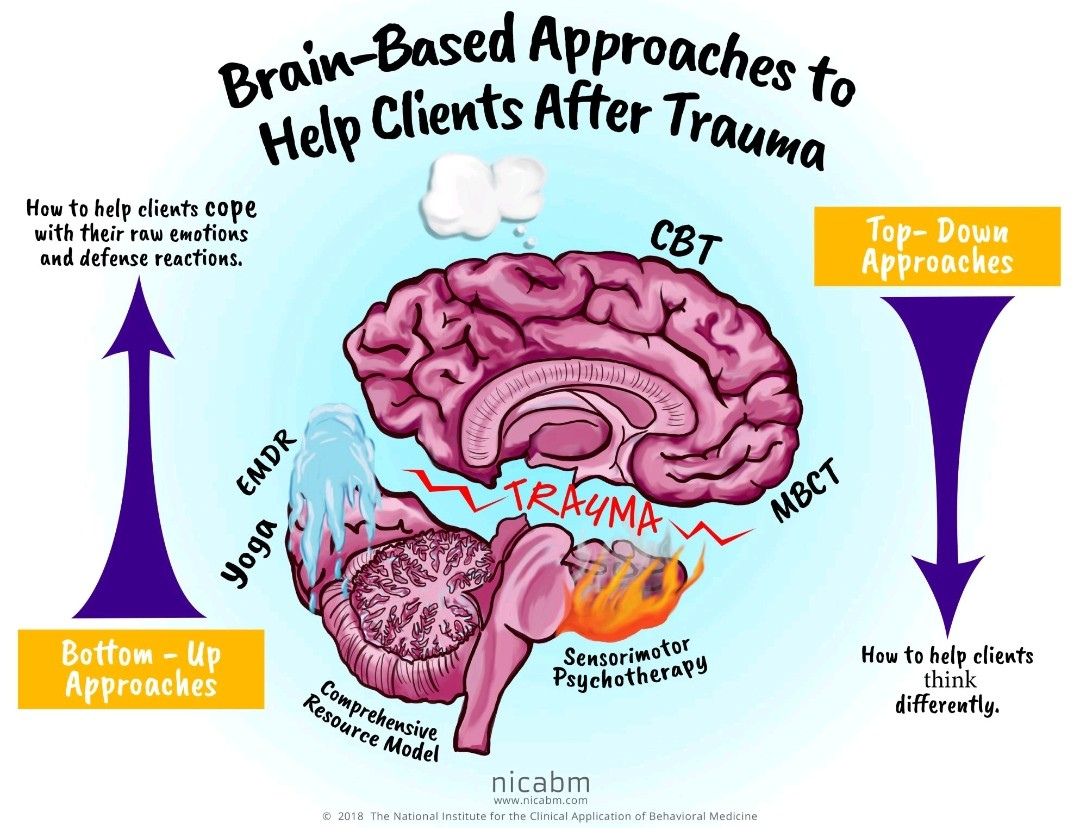
The top-down approach starts with thoughts. It focuses on how the mind interprets and reacts to situations. The idea is that by changing unhelpful thought patterns, emotions and behaviors will follow.
This approach is common in therapies like Cognitive Behavioral Therapy (CBT), Rational Emotive Behavior Therapy (REBT), and traditional talk therapy.
How it works:
A therapist helps identify negative or distorted thoughts and replace them with more balanced ones. Over time, this shift in thinking can reduce anxiety, depression, and stress.
Example:
Someone who feels nervous in social settings might work on changing the thought “Everyone is judging me” to “Most people are focused on themselves.” This new perspective can ease anxiety and build confidence.
What Is the Bottom-Up Approach?
The bottom-up approach starts with the body. It focuses on physical sensations, emotions, and the nervous system’s response to stress or trauma. The idea is that the body often holds onto experiences that the mind can’t easily process.
Therapies like Somatic Experiencing, ART (Accelerated Resolution Therapy), and EMDR (Eye Movement Desensitization and Reprocessing) use this approach.
How it works:
Therapists guide clients to notice sensations—like tightness, heartbeat, or breathing—and use grounding or movement to release tension. Once the body feels safe, it becomes easier to explore emotions and memories.
Example:
Someone who experiences panic might first learn to calm their body through deep breathing or grounding before talking about what triggers the fear.
Choosing What Works Best
Top-down helps when thoughts feel overwhelming or negative patterns keep repeating.
Bottom-up helps when emotions feel stuck or the body reacts strongly to stress or trauma.
Combination of top-down and bottom-up helps people feel both emotionally safe and mentally clear.
Both paths lead toward the same goal—feeling more balanced, aware, and in control. Healing isn’t about choosing one method over the other; it’s about finding what feels right and helps create lasting change.