
Post Traumatic Stress Disorder (PTSD) and the Brain
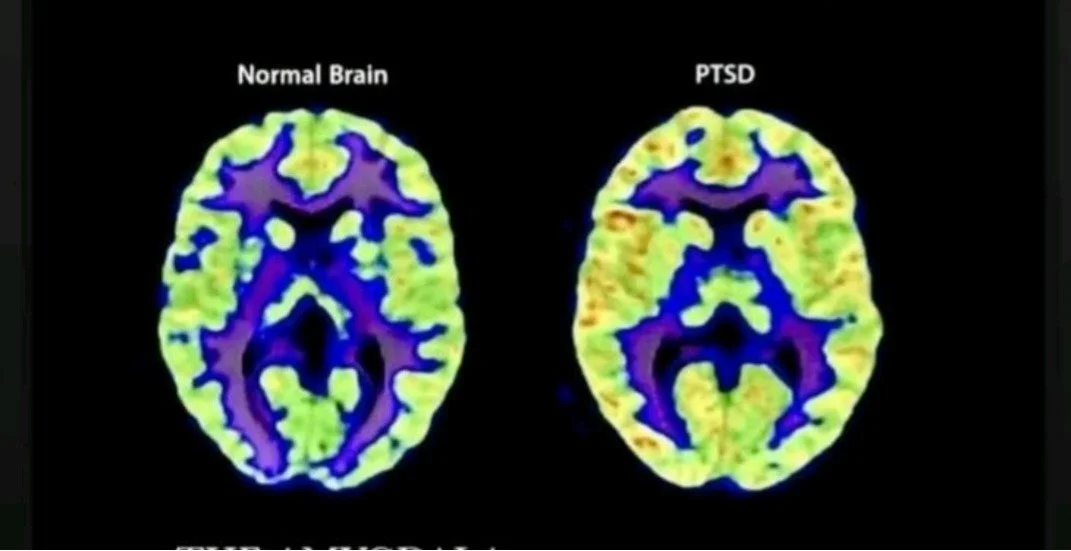
Time for some education on how Post Traumatic Stress Disorder (PTSD) effects the brain and changes more than one area of it. This may cause major problems in daily life.
THE AMYGDALA
The fear induced by trauma, is now hyper sensitized to danger. Now, everything becomes a threat.
The amygdala may increase in size.
THE HIPPOCAMPUS
Is what converts short-term memory to long-term memory.
The hippocampus may likely shrink now.
THE PREFRONTAL CORTEX
Blood flow to the left side may decrease with less ability for language and memory.
Blood flow to the right side may increase causing more sorrow and anger.
Mental Health Therapy
“Your nervous system is why mental health treatments don’t always work. Because you can’t heal a body that still thinks it’s unsafe with tools that only speak to the mind.” @AJSELFGROWTH
This is why traditional talk therapies can take years or people feel stuck because they talk about the trauma but nothing changes. They gain intellectual insight but not emotional insight. The somatic component of Accelerated Resolution Therapy (ART) acknowledges that trauma is not only a psychological experience but also a physical one. The body often holds onto trauma through tension, pain, or other sensations. By tuning into these bodily experiences, individuals can release stored energy and restore balance to the nervous system.
Key Somatic Concepts
Body Awareness: Recognizing where emotions or memories are felt in the body, such as tightness in the chest or heaviness in the stomach.
Regulation of the Nervous System: ART helps shift the body from a state of hyperarousal (fight-or-flight) to calm and safety (rest-and-digest).
Integration: As the mind reprocesses distressing memories, the body simultaneously releases the associated physical tension, leading to holistic healing.